
For two years, AI voice technology had a strange, one-sided problem. Businesses were rapidly deploying AI to answer their phones - handling support calls, taking reservations, screening customers - while the person on the other end of the line still had no AI that could make a call for them. You could talk to a company's bot. You still had to be a human to place the call in the first place. That asymmetry just started breaking down, and it's worth being precise about who actually broke it - because the popular version of this story ("Google and Apple both did it") isn't quite right.
What Google actually shipped
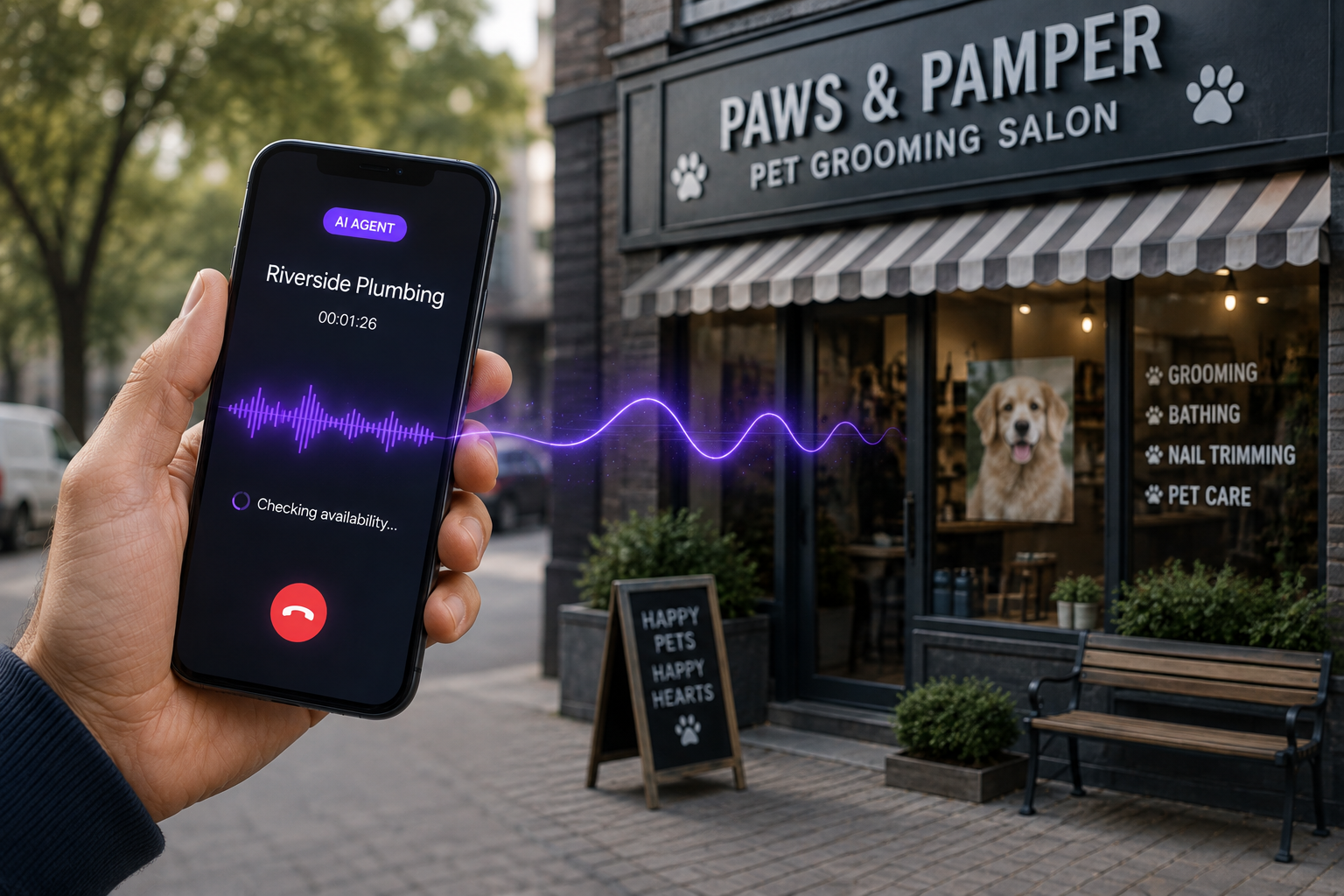
At Google I/O in May 2026, Search VP Elizabeth Reid announced that Google Search can now call local businesses on a shopper's behalf. For a specific set of categories - home repair, beauty, and pet care were named explicitly - you can ask Google to call a business, check pricing or inventory, and in some cases complete the purchase, without you ever picking up a phone. This is a real, shipped consumer feature, not a research demo. It's been rolling out across most of the United States through the summer, with calls monitored and recorded for quality assurance, and businesses can manage or opt out of receiving these calls through their Google Business Profile settings. The genuinely interesting part isn't just that Google's agent can call a business - it's who's picking up. Since businesses have spent the last two years automating their own phone lines with AI, an increasing share of these calls now connect one company's AI agent to another company's AI agent, negotiating a booking or checking stock without a human on either end of the line.
Correcting the record on Apple
Here's the part worth being accurate about: Apple has not shipped an equivalent outbound-calling agent. Siri can initiate a call when you ask it to - "Hey Siri, call the pharmacy" - but from that point on, you're on your own: waiting on hold, navigating the menu, talking to whoever picks up. Apple's real 2026 advance is on the opposite side of the phone call - smarter call screening, where your phone can answer on your behalf, ask an unknown caller who they are and why they're calling, and show you a live transcript before you decide whether to pick up. That's a genuinely useful, separate problem being solved well. It's just not the same milestone as Google's - one is about handling calls coming in, the other is about placing calls going out. Lumping them together overstates what Apple has actually built so far.
The apps already doing this for individuals, today
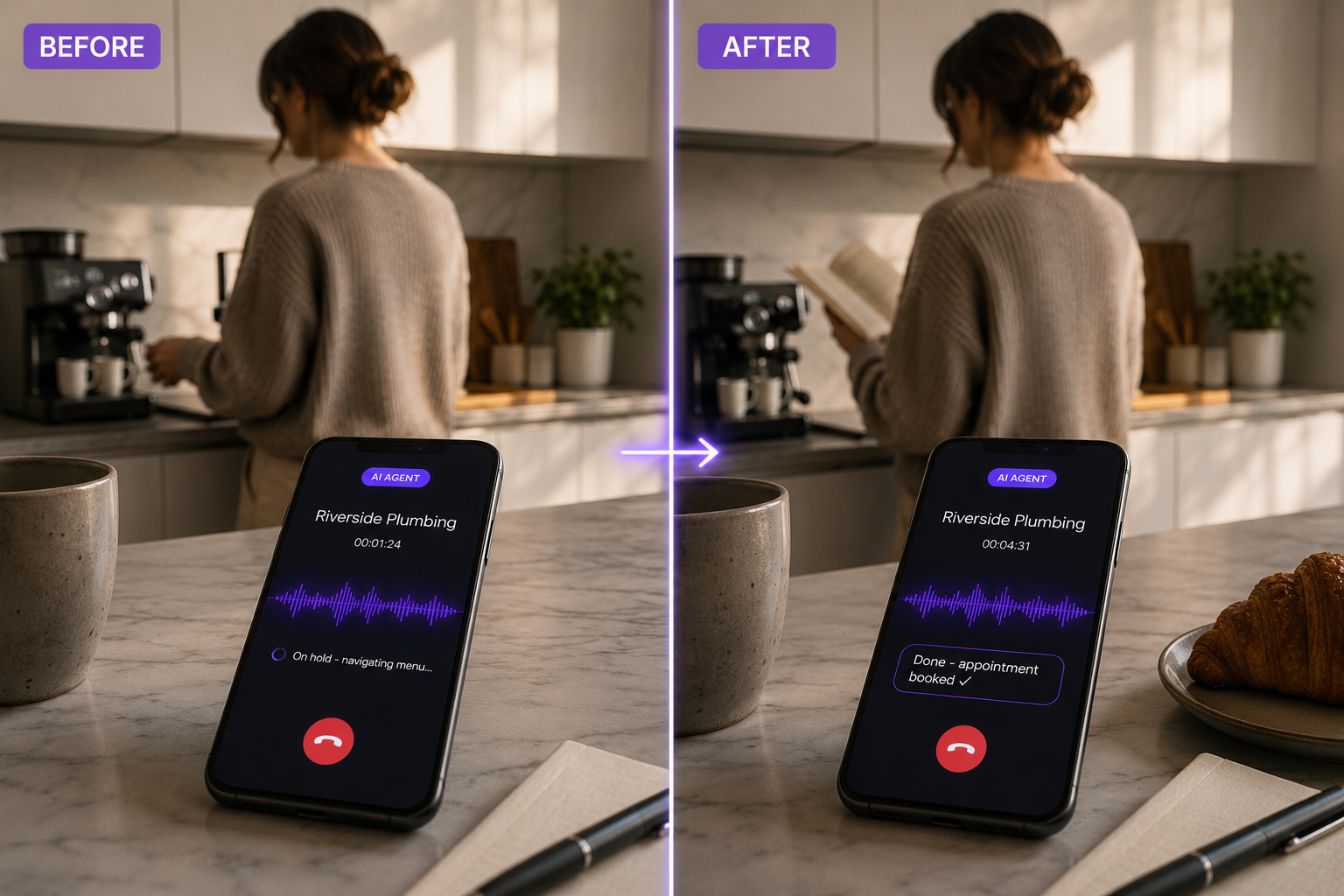
Google's feature is scoped narrowly by category and tied to Search. If you want a general-purpose tool that places any call on your behalf, dedicated consumer apps already exist. Simple AI, an iOS and Mac app, is built specifically around this - users have reported it successfully navigating long, multi-step interactive phone menus, including one account of it handling a call with a cable provider that ran nearly 20 minutes and was passed across three different human agents before resolving. It's narrow by design - phone calls only, no messaging or inbox features - but it's a real, working example of the category outside of a tech giant's ecosystem.
The legal line that doesn't go away
Before building or relying on any of this, there's one rule that hasn't changed: AI-generated voices calling people fall under the same Telephone Consumer Protection Act rules that govern robocalls, a position the FCC settled in 2024 and that still applies now. The line that matters is consent - a service call someone opted into is fine, an unsolicited call is not. If you're a builder thinking about adding outbound calling to an agent, that consent boundary is the first thing to design around, not an afterthought to bolt on later.
The honest summary: the "AI makes your calls for you" gap is closing, but unevenly. One company shipped a real, scoped version of it. Another company solved a different, adjacent problem well and gets credited for the wrong one. And a handful of smaller, dedicated apps are already doing the general-purpose version for anyone who wants it today - worth checking out if the specific business categories Google covers don't include what you actually need a call made about.